Cleanings and polishing that get ahead of trouble. Extractions when a tooth can't be saved. Oral mass removal and biopsy when the doctor finds something in the mouth that needs answers. All of it happens in-house, at the practice that keeps your pet's record.
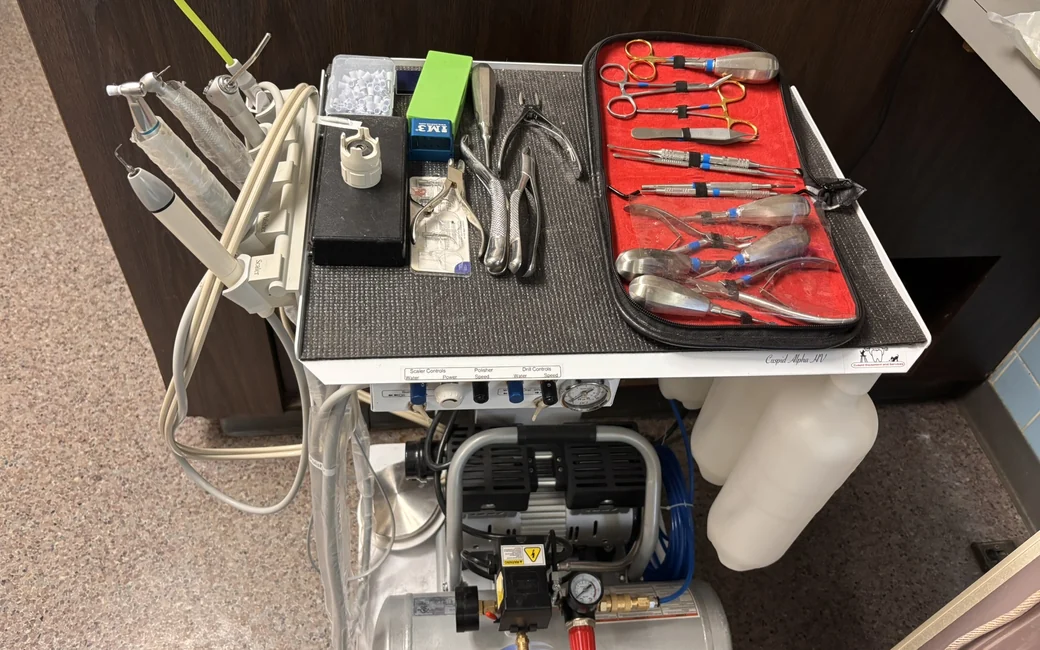
Dental cleanings. Tartar and plaque build up on a dog's or cat's teeth the same way they do on yours, except your pet never brushes. Left alone, that buildup leads to sore gums, infection, lost teeth, and pain your pet mostly hides from you. A cleaning removes it and lets the doctor look closely at every tooth and the gums around them.
Extractions. Some teeth are too damaged or too infected to save. When that is the case, the doctor tells you plainly why, what removing the tooth involves, and what eating and recovery look like afterward. Dogs and cats do remarkably well after a bad tooth comes out, because the pain they were living with is gone.
Every dental visit goes into your pet's one record at the practice. That matters more than it sounds: the doctor compares this year's mouth to last year's, catches what changed, and nothing gets lost between visits or retold from memory.
Pets hide mouth pain well. These are the signals owners actually notice at home.
One honest caveat: you can't diagnose a mouth from the couch, and neither can we. If you are seeing any of these signs, the right next step is an exam. The doctor looks at the teeth and gums, tells you what is actually going on, and whether a cleaning, an extraction, or nothing at all is the answer. Call 973-881-0430 and describe what you are seeing.
Dental work is one of the visits owners worry about most, usually because of a surprise bill at a previous clinic. Here it works in the open. The doctor examines your pet's mouth first, explains what needs doing and why, and you get the cost for your pet's specific case before you commit to anything. Blue Cross is owner-run, so the recommendation comes from the state of your pet's mouth, with no corporate quota behind it.
For current pricing on your pet's situation, call 973-881-0430.
It depends on the animal. Small breeds, older pets, and some cats build tartar faster than others. The honest answer comes from the doctor looking at your pet's mouth, usually during a wellness exam, and telling you what your pet actually needs.
Mild dog breath is normal. Breath that makes you turn your head is usually dental disease, and it tends to get worse and more painful the longer it waits. It is worth an exam.
Almost all pets eat, play, and act happier within days of losing a bad tooth, because the constant pain is gone. The doctor walks you through recovery and feeding before you go home, and the team that did the work is the team you call with questions.
Yes. Care is available in Spanish. This page is also available in Spanish.
Families bring their dogs and cats in for dental care from Paterson and the towns nearby, including Clifton. The hospital is at 470 McLean Blvd, a few minutes from the Clifton line.
An exam tells you what is actually going on in there. New clients welcome.